Attribution Models: Which One Should You Actually Use?
Last-click, first-click, linear, data-driven. Stop guessing. Here's when to use each model and why most businesses get it wrong.
The Attribution Problem Nobody Solves Well
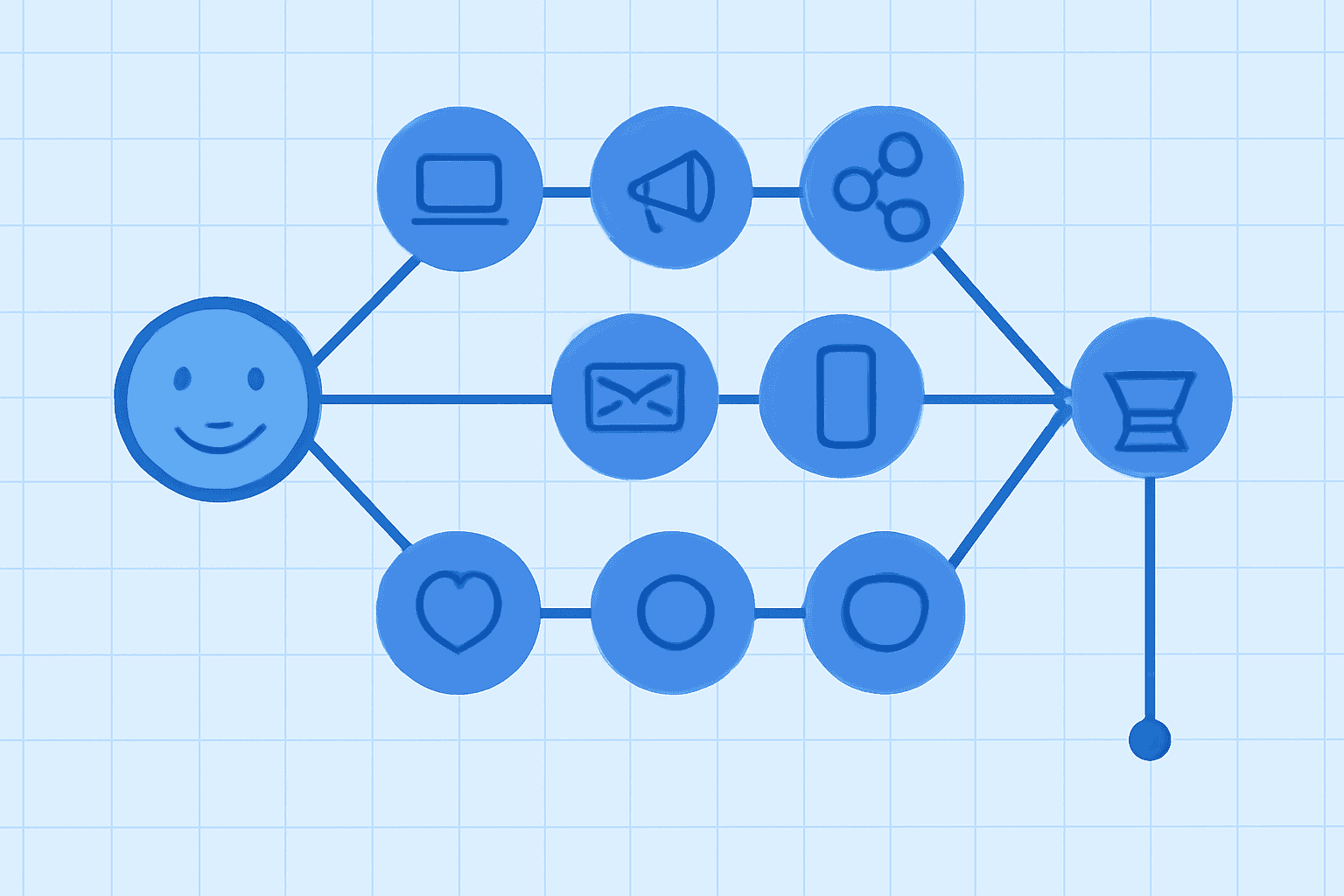
A customer sees your YouTube ad, googles your brand a week later, clicks a retargeting ad on Instagram, and finally converts through an email link.
Which channel gets credit for the sale?
The answer depends entirely on your attribution model—and the model you choose shapes everything: your perceived channel performance, your budget allocation, your optimization decisions.
Most businesses use the default model (usually last-click) without understanding what it means. This leads to systematic over-investment in bottom-of-funnel channels and under-investment in awareness.
Let's fix that.
Attribution Models Explained
Last-Click Attribution
How it works: 100% credit goes to the last touchpoint before conversion.
Example: YouTube ad → Brand search → Instagram retarget → Email
Email gets 100% credit.
Best for:
- Direct response campaigns with short sales cycles
- Businesses with simple customer journeys
- When you only care about immediate conversion drivers
Problems:
- Ignores everything that built intent
- Massively over-values retargeting and brand search
- Under-values awareness and prospecting channels
First-Click Attribution
How it works: 100% credit goes to the first touchpoint.
Example: YouTube ad → Brand search → Instagram retarget → Email
YouTube ad gets 100% credit.
Best for:
- Understanding which channels drive initial awareness
- Businesses focused on customer acquisition
- Evaluating top-of-funnel performance
Problems:
- Ignores everything that nurtured and converted
- Over-values awareness, under-values conversion channels
- Rare to see in practice
Linear Attribution
How it works: Credit split equally among all touchpoints.
Example: YouTube ad → Brand search → Instagram retarget → Email
Each gets 25% credit.
Best for:
- Businesses with genuinely multi-touch journeys
- When you don't have enough data for statistical models
- Fair representation of full funnel
Problems:
- Treats all touches as equal (they're not)
- A final conversion-driving ad gets same credit as a passing impression
- Too democratic—doesn't reflect actual impact
Time Decay Attribution
How it works: More credit to touchpoints closer to conversion.
Example: YouTube ad (10%) → Brand search (20%) → Instagram (30%) → Email (40%)
Best for:
- Long consideration cycles where recent touches matter more
- B2B with extended sales processes
- When timing of interaction matters
Problems:
- Still somewhat arbitrary weighting
- May under-value crucial early touches that started the journey
- Doesn't account for touchpoint quality
Position-Based Attribution
How it works: 40% to first touch, 40% to last touch, 20% split among middle.
Example: YouTube (40%) → Brand search (10%) → Instagram (10%) → Email (40%)
Best for:
- Recognizing importance of both intro and conversion touchpoints
- Balanced view of acquisition and conversion
- Businesses with clear funnel stages
Problems:
- Arbitrary 40/20/40 split
- Middle touches may be critically important but get short-changed
- Doesn't adapt to your actual journey patterns
Data-Driven Attribution
How it works: Uses machine learning to assign credit based on actual conversion patterns in your data.
How Google's version works: Compares converting journeys to non-converting journeys to identify which touchpoints actually impact conversion probability.
Best for:
- High-volume accounts (needs data to model)
- Accounts with diverse touchpoint combinations
- Most accurate representation possible
Requirements:
- Google Ads: 3,000+ clicks AND 300+ conversions in 30 days
- GA4: 400+ conversions per conversion type
- Meta: Built into their attribution model
Problems:
- Black box—you can't see the math
- Needs substantial data (most accounts don't qualify)
- Different platforms have different DDA, causing cross-platform confusion
Which Model to Use: The Decision Framework
If You Have Low Data Volume (<100 conversions/month)
Use: Linear or Position-Based
You don't have enough data for statistical models. Linear gives fair representation; Position-Based balances intro/conversion recognition.
If You're E-Commerce/Direct Response
Use: Data-Driven (if you qualify) or Time Decay
Recent touches typically drive immediate purchases. But don't ignore prospecting entirely—use time decay to give some credit to awareness.
If You're B2B/Long Sales Cycle
Use: Position-Based or Linear
First touch (how they found you) and last touch (what converted them) both matter significantly. Middle touches often include critical nurturing.
If You're Focused on Customer Acquisition
Use: First-Click or Position-Based
You need to understand what channels introduce new customers, not just what closes existing prospects.
If You Have High Volume & Want Accuracy
Use: Data-Driven
Let the algorithms figure out true impact. But complement with your own analysis of channel roles.
The Attribution Settings You Must Change
Google Ads
- Go to Tools & Settings → Measurement → Attribution
- Switch from Last Click to Data-Driven (if eligible) or Position-Based
- Update conversion actions to use new model
- Allow 30 days for data to update before evaluating
GA4
- Go to Admin → Attribution Settings
- Set reporting attribution model (affects all reports)
- Set cross-channel data-driven vs rules-based
- Set lookback windows (default 90 days for acquisition, 30 days for other events)
Meta
Meta uses its own data-driven model internally. You can adjust attribution windows:
- 1-day click (very conservative)
- 7-day click (standard)
- 7-day click + 1-day view (includes view-through, more generous)
Recommendation: Use 7-day click for most accounts. Add view-through only if you run significant awareness/video campaigns.
The Practical Reality: Multi-Model Analysis
No single model tells the whole truth. The smartest approach uses multiple models to understand channel performance from different angles.
Build a Multi-Model Dashboard
Track each channel's performance under:
- Last-click (closing power)
- First-click (acquisition power)
- Linear or Position-Based (full journey contribution)
Compare the three views:
- Channels that look good only in last-click are closers/converters
- Channels that look good only in first-click are introducers/prospectors
- Channels that look good across all models are truly valuable
Use This for Budget Decisions
Don't cut a channel because it looks bad in last-click if it's driving significant first-click conversions. You'd be cutting your prospecting without realizing it.
Similarly, don't over-invest in retargeting just because it has great last-click performance. It may be taking credit for work other channels did.
Attribution's Dirty Secret
Here's what nobody tells you: even the best attribution model doesn't capture everything.
What Attribution Misses
Brand effects: Seeing ads builds familiarity even without clicks. This "passive exposure" doesn't appear in any click-based attribution model.
Offline influence: TV, podcast, word-of-mouth, billboard—all influence digital conversions but don't appear in digital attribution.
Cross-device journeys: User researches on phone, converts on laptop. If cookies don't connect them, attribution breaks.
Incrementality: Attribution tells you what converted, not what caused the conversion. Many attributed conversions would have happened anyway.
Complement with Incrementality Testing
The only way to truly know a channel's value:
- Geo-based holdout tests (turn off ads in some regions)
- Lift studies (platform-provided experiments)
- Pre/post analysis (before/after pausing channels)
Attribution tells you what the customer journey looked like. Incrementality tells you what actually mattered.
The Bottom Line
Attribution is a lens, not truth. Different models show different views of the same reality.
Stop using default last-click and wondering why retargeting looks amazing while prospecting looks terrible. Choose a model that matches your business, use multiple models for perspective, and remember that all attribution has blind spots.
Not sure which attribution model is right for your business? Our audit includes attribution analysis—showing how your channel performance shifts under different models and recommending the approach that matches your goals and funnel.